About Dana

My photo
I'm a dichotomy of blue jeans, pretty jewelry, frugalista, and Southern girl living the simple rural life. I want to live my life holistically, thoughtfully, economically, and most of all gratefully, and encourage other women to do the same.
Showing posts with label Gardening. Show all posts

Wednesday, November 20, 2013

Composting

I am thankful I am able to waste less.

I started composting a couple of years ago, and it has enabled me to keep many food and paper items out of the trash can and ultimately out of the landfill.

Here's one day's worth of compost material. If I'm throwing it away, and it's not right for the chickens to eat, it makes wonderful compost after a few months for my vegetable and flower beds.

By living in the country and having a little space to move around, I feel I must compost to be responsible to Mother Earth. Composting doesn't take much space, and you can compost even in a small backyard. With the right mix of materials, there should be no odor at all. I talk about the proper ratio in this previous post.

Think outside vegetable and fruit peels. Used tea bags and coffee grounds (including the paper filters) make good additions to a compost bin. Flowering shrubs such as azaleas and camellias love the acidity they add to the soil when fully decomposed.

Composting always sounded so difficult to me before, but I have found it is an easy way to live "greenly" and improve my flower beds at the same time. And since it's November, it almost time to rake all the dried leaves from the ground and add them to the bin. By spring, it will all turn into black magic.

Hope you are inspired to do your part, too. It's a cinch!

Love,
TCB

Related Posts

Winter is Ideal for Composting

Tuesday, September 24, 2013

Patient Impatiens

Last summer, I wrote about the terrible disease that plagued all the beautiful impatiens in our part of the country. They all died, and local garden centers suggested it would be years before we had the opportunity to buy a new hybrid of impatiens that were impervious to this disease.

In case you missed this post, you can see the impatiens story here.

I have been using begonias to fill in for the last two years, but it's just not the same. Begonias are beautiful; in fact, their foliage is more showy than impatiens' leaves. But I want tons of flowers, man!

So as my begonias try their best to become a bounteous eye-feast in my deck planters, I captured a sight that warmed my heart just a little.

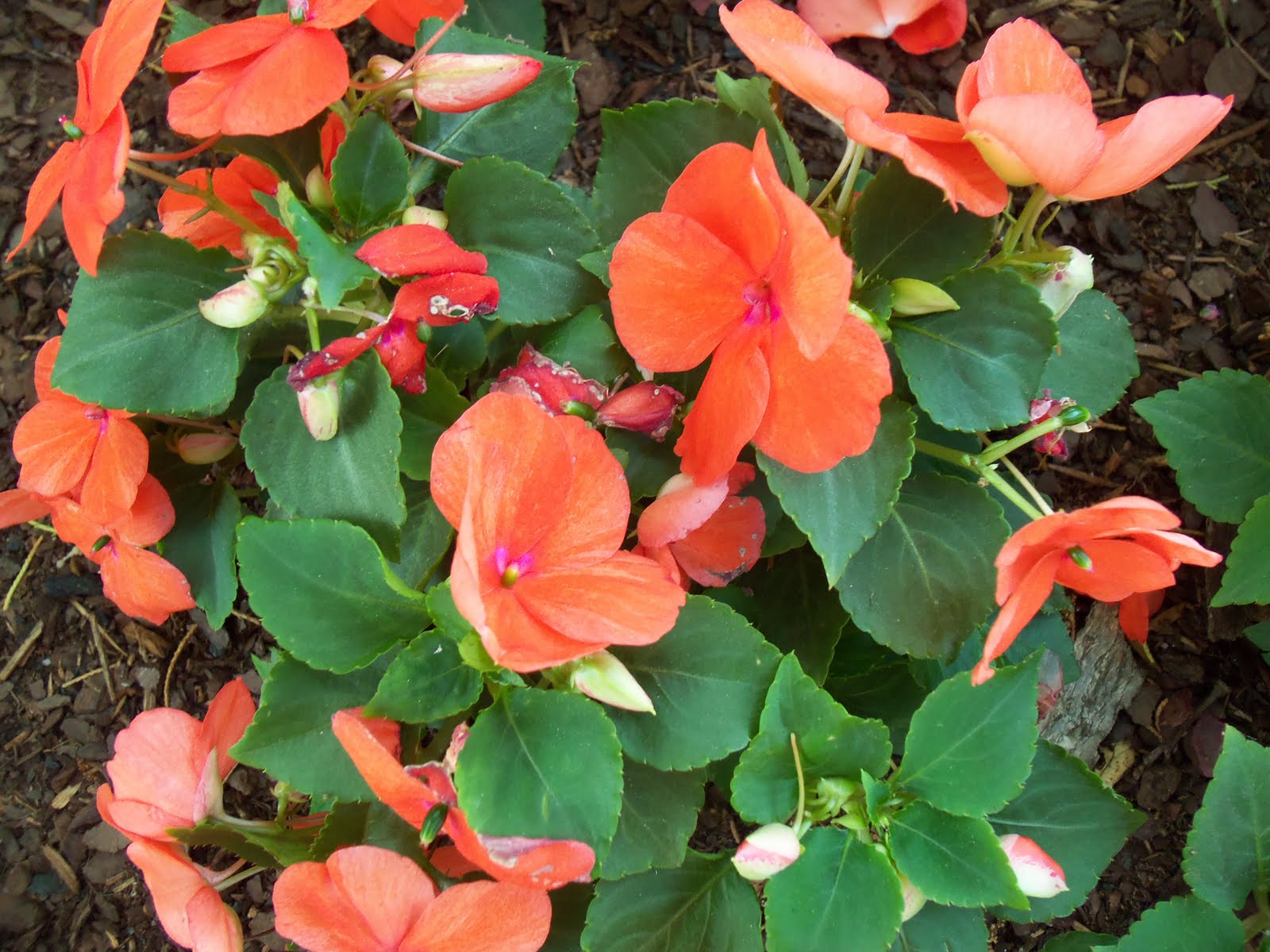
A lone impatien refusing to succumb to disease. It was a volunteer from last year that popped up halfway through this year's growing season, surpassing the begonias by several inches.

I love impatiens. Come back soon, you hear?

Love your friend,
TCB

Tuesday, July 23, 2013

Reminiscing about Planting Southern Vegetable Gardens

I'm still reminiscing all this month here at The Country Belle, writing about family and family activities. I've been gathering (a little) produce from my garden - mostly herbs and a few tomatoes - because our excessively wet weather this summer has our Southern garden saying, "What?! What?!"

I can count on one hand the number of days we have not had any rain this summer. Talk about the opposite of the drought-land I'm so used to in South Carolina in July. And 80 degrees for a high temperature? Unheard of this time of year down South!

I'm not complaining, but my garden kind of is complaining. It makes me remember when I was a child, and we often spent spring and summer nights and weekends planting something in my grandfather's garden, shelling beans until my fingers cracked, snapping green beans until my hands were sore, or shucking corn off the back of the pickup truck (and trying to avoid yucky worms!) until the sun went down.

It makes me remember a story that I still sometimes get laughs about from my family members. I was a Southern country girl growing up in South Carolina but trying to somehow work some sophisticated "girlie" stuff into my life. So often on Saturday night, I would pull out my light blue manicure kit and give myself a full-scale mani-pedi.

I still have that kit after all these years.

I still use it.

Back to the story...I was getting my nails done for Sunday morning church. You know, looking all right.

Well, one weekend I got a little super ambitious and decided to work my manicure into my Saturday morning instead of Saturday evening. And then I found out we were going to the farm. And then I learned I would need to plant potatoes.

In case you don't know about these things, you can take a potato and cut a piece that has an "eye" on it, plant it in a hole in the garden and it will grow a whole new plant with a plethora of potatoes. (How's that for an alliteration?)

My grandfather hoed the holes and cut up the potatoes. So no problems there.

Then I  realized I needed to stick my precious manicured nails into the bucket of wet potatoes, pull them out one by one, and drop them in a hole to be covered.

Do you know how hard it is to do a job like that without getting dirt and other crud under your fingernails? You don't. And I protested. "But it will mess up my manicure!"

I was laughed out of the garden. But then I had to promptly return and do the job.

Rural lesson learned: No manicures on Saturday morning. Wait 'till the chores are done.

Hope you're having a wonderful day wherever you live.

Love,
TCB

Saturday, April 13, 2013

Spring Planting Time

It's time for spring garden planting. I am still using the"square foot gardening" method I used the last couple of years. That may seem strange considering we have land to spare living in a rural area, but somewhere along the way I got tired of fighting weeds and deer. Plus, our family is small, so a couple of square-foot gardens are perfect for our needs.

The beauty of a contained, raised garden bed is that once you mix your soil the first year, there is really not much follow-up for subsequent years. Just a trowel-full of compost into each "square" before planting, and you're ready to go.

This year, I mixed commercial mushroom compost with my own backyard compost, made from decomposed fruit and vegetable scraps, yard debris, and chicken manure. (Those chickens are good for something besides eggs. It's a 2-for-1 deal).

Doesn't that look like rich soil?

I'm into simple. This bed contains herbs - rosemary, lemon balm, and thyme with a space left for basil - and vegetables - broccoli and squash. The screen contraption is the only way I can keep out deer and rabbits and supposedly domesticated critters like cats.


This bed is all about the tomatoes - four different kinds. The best part of summer is home-grown tomatoes. I squeezed in a little cilantro and parsley. I love herbs for cooking and fresh ones make a big difference. They are expensive at the grocery store but so easy to grow!

Hope this inspires you to plant a garden even if you only have a small patio. Herbs and tomatoes will grow wonderfully there!

Happy Spring,
TCB

Related Posts:

Spoils of the Day
My Secret to Easy-Does-It Spring Gardening

Tuesday, January 22, 2013

How to Keep Deer from Eating Your Plants


In the spring, we hear a lot about keeping deer away from our landscape plants; however, it is in the winter we need to be extra alert to deer strikes. Foraging for food in the forest is not as profitable this time of the year. When it gets extra cold for a long period of time, the deer sprint up the hill from the river to see what delicacies are available to eat in my backyard. And of course, they never come during the daytime when I can shoo them away. They come when I am snoozing away. (Although sometimes I am dragging opossums out of the hen house).

There is a list one of my local gardening centers has pulled together of plants typically found in Southern gardens that deer like LOVE to eat. Several of these are in my garden right now and nary a deer has tasted them.

These include:

Fatsia Japonica - Planted near my house - so near, in fact, it is touching brick columns - is too close for comfort for a deer to attempt a nibble.


Pansies - I tried planting these at the front steps. A nasty varmint (that's what we call deer who eat landscape plants and not woodland fodder) plowed through 10 plats of pansies in one night. Do you know how much 10 flats of pansies cost and how much time it takes to plant them? Never again. I have found planting them in a basket that swings on a hanger is a good deterrent. Which is also good for putting a little color at eye level to see through the kitchen window.


Hosta - A candy-lickin' treat for deer, this beauty is best saved by putting them under a motion light and dousing them with deer-off repellent found at garden stores. Sorry, but this one is a struggle to maintain. Most years I do, but sometimes I lose to the deer.


Camellia - Every good Southern garden has one of these shrubs. I have been fortunate. I think my leaves are tough enough and the plants so close to the house, the deer decide to look for better options. Older is better. Young leaves are what deer like to eat best.

Keep an eye out. Baby, it's cold out there!

Love,
TCB

Related information:

Thursday, January 3, 2013

Freezing Broccoli

I have been away from The Country Belle blog for some time, and let me tell you, I was the laziest person over the holidays. Once I slipped into non-work mode, all bets were off. I managed to vacuum the dog hair from the floor and that, ladies and gentlemen, was the extent of my Christmas cleaning.

I did manage to slide myself off the couch and out of my "Storage Wars" TV-induced coma to make a little trip around the corner to a local farmer's produce stand. I've never had much luck with growing broccoli, but this man produces some outstanding broccoli every winter - nice and tender. I've never found anything like it in the grocery store.

So I bought him out one day - I think it was 13 bags of broccoli. I washed it all and let it dry thoroughly. Drying well is important to minimize ice crystals on the broccoli when you freeze it.

Then I cut each head into florets and packaged them in freezer bags. My chickens love the leftover stumps!

Now my family can enjoy the taste for many months to come. It's one vegetable everyone in my house seems to enjoy.

Using the freezer to keep a supply of locally grown produce ensures you are still eating well (and in this case, organically) when the vegetable (or fruit) is out of season. I similarly freeze strawberries in May and blueberries in June to enjoy all year long in pancakes and smoothies.

Happy New Year and happy homesteading!

Love,
TCB

Related Posts:
Why does my freezer look like this?

Thursday, October 25, 2012

You'd be Surprised What You Can Buy Locally

Rural living provides an easy opportunity to "go green." Living sustainably is eco-friendly and fiscally responsible. I'm not even mentioning the convenience. If you don't live in town, sometimes it's very time consuming to travel to all the stores you need to complete your shopping list.

When I'm not growing or making it myself, I really like to support the local farmers and craftsmen that live in my rural area.

On a recent Saturday afternoon full of errands (I group them for less driving), I purchased from three neighbor vendors who had exactly what I needed at exactly the right price.

Homegrown tomatoes from the farm stand. I didn't plant a second round, so my supply was long gone.

Chicken feed pellets produced locally from another community right down the road. It was sold by a family-owned feed-and-seed supplier 5 minutes from my house. (I love going there for good conversation and a Coke).


A flat of pansies hauled home in the back of my SUV from a grower 10 minutes from home. You can't beat 24 plants for $10 (and I didn't have to exhibit any patience growing my own flowers from seeds).

Buy local! Support your neighbors and create a better life for your family. Knowing who made what you consume each day is one important step we all can take to be environmentally and safety conscious.

Happy day!
TCB

Tuesday, July 24, 2012

Survivors and Goners

I thought I was doing something dreadfully wrong this year. Here in the South, we love our impatiens and they have always been reliable to fill my large deck planter which is smack under the shade of several large oak trees. It's the one place I can plant impatiens that the deer won't eat.

This year, I faithfully planted white and lavender impatiens in my deck planter. A few days later, I noticed they were all dying, top down. It looked as though the deer had gotten brave overnight and come by for a snack.

So I put out a few deer deterrents and hoped for the best.

And this is what I ended up with.
Goners.

Here were last year's impatiens.
A few impatiens struggled to survive.
Then I thought maybe the chicken manure in the compost was a little too strong.

So after a while, I replanted some new impatiens. And within two days, they started dying, too.

So I traveled back to another garden center and began looking for replacements other than impatiens this time. I finally asked the knowledgeable gardener on staff what I was doing wrong.

And bingo! Just like that, he worked it all out for me.

"Nobody has impatiens this year."

What???

It appears some insidious moldy disease has killed impatiens up and down the east coast. And the saddest part is that it is probably going to be YEARS before we get these stalwarts back in our gardens. Meanwhile, researchers are trying to propagate a variety that is not susceptible to the killer disease.

Here's a video that explains what is going on with this impatiens killer.


Gardens all over the South are crying right now.

I'm looking to begonias to fill in this year. We gardeners know flexibility is rule #1 if we want to have a pretty landscape.

TCB

Friday, July 6, 2012

Summertime Vegging

Vegging out sounds pretty good for the summer months, and by that I mean "doing nothing for three whole months straight."

Unfortunately, that doesn't happen around here.

I have a small garden. And my dad has a small garden. Add those together, and you have a mildly large garden with vegetables that need eating or putting up in the freezer for the winter months.

Now, I could get my Italian on and can a nice marinara sauce for future months. Or I could can a few tomatoes for wintertime vegetable soup.

But that's not the route I like to go with homegrown tomatoes. Instead, I gorge myself on them for lunch and supper every day. As far as I'm concerned, June and July tomatoes from my garden or my family's garden are the best food on the face of the earth. People should just stop growing tomatoes in the other three seasons. Really, what is the point?

If you don't live in the country and can't grow your own or you don't have the ability to buy some farm-grown tomatoes in the summer, I am sorry. I am truly sorry for you.

Tomatoes aren't the only bounty.
Thank goodness my son likes to shuck and silk corn. That's because it's the first year I've let him do it. I am willing to let him do it every summer from now on. But my guess is that he will not be too enthusiastic about it next summer. I am making the most of it this summer, that's all I'm sayin'. (Do you like his creative setup - trash can on top of the step stool on top of the box to make it even with his seat? Whatever it takes, baby.)

Happy, happy summertime.
Love,
TCB

Tuesday, June 26, 2012

Instant Caprese Salad (for One)

There's one reason I grow basil in my summer garden: I love caprese salad, and fresh basil is pretty expensive at the grocery store. Using my homegrown tomatoes and a couple of other pantry staples, I can create a quick summer lunch for myself.

Instant Caprese Salad (for One)

one ripe tomato
fresh mozzarella slices
basil leaves, washed and patted dry
sea salt
ground black pepper
balsamic vinegar
extra virgin olive oil

This couldn't be easier. Slice tomatoes and place on plate. Sprinkle with salt and pepper. Slice mozzarella and place on plate with basil leaves in the desired arrangement. Drizzle olive oil and balsamic vinegar over all.

What a great, light lunch on a hot summer day when produce is at its finest.

Happy eating!
TCB

Wednesday, April 25, 2012

My Secret to Easy-Does-It Spring Gardening

After many years of gardening as a hobby, I have learned that simpler is more beautiful. I've admired plenty of colorfully packed flower gardens in Southern Living and Better Homes & Gardens.

While in the past I've tried to replicate the perennial and annual flower beds that grace the pages of those magazines and many others, I find by the end of the season they are a bedraggled mess and never really grow together the way they should. You see, I have a job as a writer, PR consultant, blogger, homeschool teacher, mom, and wife and all the extra duties that come with those titles. While my intentions are good (and I truly love gardening), I never have enough time to create the master gardener look, which takes plenty of weeding, moving around flowers, and filling in bare spots continuously throughout the spring, summer, and fall seasons.

I have refused to give up the dream, so through experimentation I've come to realize the most wonderful gardens can be a profusion of just a few colors from a few, trusted, hardy plants. Not including the perennials I have as "foundation" plants in my garden beds, each year I rely on the addition of a few annuals and perennials to fill in the bare spots and make my gardens look like I've spent lots of time on them. In fact, my time is mostly spent at my keyboard or driving to swim team or housecleaning.

Each year, I rely on a formula for the four cast iron urns on top of pillars surrounding my patio.
Plant Spike Dracaena in the middle for height. Surround it with a filler and a trailing plant. This year it's Dusty Miller and Salmon Petunias. This planting is just one week old. Within three weeks, the urns will look like a professional planted them and last throughout the spring, summer, and fall seasons (providing they get water each day during our scorching South Carolina summers).

Planting pots of annuals here and there around the patio and to fill bare spots in my perennial beds works wonders to pull the entire look together. Just two or three plants used throughout the garden make as big a statement as a hodgepodge of plants that may or may not be acclimated to the area.

My tried and true include:
Creeping Jenny as a trailer.

Petunias as fillers and trailers, depending on the type. The red and white ones here are some of my favorite and are called "Red Picotee."

Impatiens to fill the shady planters on my backyard deck, well out of the reach of deer.

Clematis as a climber on my arbor.


Hosta as filler. They are perennials and grow larger each year. There are so many different varieties, they can be a show all on their own in a small bed. Mine are backed by Mountain Laurel up against the back of my home in one small bed.

And Lantana, which now comes in a wide range of colors.

I use these plants over and over each year. Since I have narrowed down the types of flowers I consistently use, I am happy with the results throughout our three warm seasons. I can focus my attention on the other tasks and people that need me (and on sitting by the pool).

Happy gardening,
TCB

Wednesday, February 29, 2012

What's Blooming in my Southern Garden in February and March

We have had a super mild winter, so the blossoms have begun peeking their heads through a little earlier than usual this year. Although I've yet to spend a day weeding the garden, there are signs of warm weather sprinkled throughout my landscape.

If you need some ideas to add color to your garden this (usually) bleak time of the year (weather-wise, that is), consider these:

Eastern Redbud (a small tree)

Daffodils (you must plant bulbs in November)

Here's a shy one. It's called Daffodilus Bashfulus.

Viburnum. Mine is a small tree after thriving for about 10 years in the front yard. There are smaller varieties.

Dwarf Nandina are beautiful in the cold winter air because they turn crimson.

Camellia Japonica, of course. A true Southern traditional shrub whose cut flowers look beautiful floating in bowls of water.


And Breath of Spring. This is a photo from last year. My plants are sparsely blooming this year because they received a haircut at a most unfortunate time in the past.


Now you have six new ideas to add to your garden. None of these require a green thumb. After the first season of establishment, you really don't have to do much at all except occasionally trim Viburnum and Breath of Spring and feed them all periodically.

Happy gardening,
TCB

Friday, October 7, 2011

Fall Fragrance in the Garden

The best smell in the garden this fall time of year comes from....

tea olive shrubs.

You wouldn't imagine an evergreen shrub with the most inconspicuous flowers could perfume the air all around it. I don't even have mine planted near my backyard patio. They are on the side of the house, but the smell wafts all the way over to my relaxing chair out back. In fact, the tea olive fragrance actually gets stronger if you move farther away from it. Stick your nose in the bush to try and take a whiff like you would treat a rosebush, and you won't get nearly the full aroma.

And you know what's so beautiful about them to me? They survived our HOT, DRY summer and the deer don't eat them. Woo-hoo for the country tea olive!

Plant one (or two or three) this fall or winter in your yard.

Love,
TCB

Tuesday, June 28, 2011

Toad House

Everyone is talking about "eco-friendly," "green," and "eco-conscious" living. In fact, I've written numerous articles on the topic for a handful of magazines over the last couple of years. What I've found is the most eco-friendly way is to recycle what you have. I do it in the garden all the time. Old vegetable peelings go in the compost bin, as do the leaves I rake out of my flower beds, to be reused as food for new plantings. Bubble wrap from packages gets reused to wrap more materials I mail out.

And broken terra cot pots (there are always a few around) get recycled, too. Smaller pieces get used as shards to block the holes in the bottoms of other planters so soil will not flow out everywhere when I water the plants.

The bigger part of the broken pot makes a great toad house.
Toads? Why would you want toads in your garden?


Because they are gooooood for hostas (and other plants).

Toads eat slugs and snails. And although God made slugs and snails for some reason, it wasn't for their care and concern about the green plants in the garden. Oh, they are concerned with them. They are concerned how many of those fat, juicy leaves they can stuff in their tiny, slimy mouths every night. And toads eat them all up so they can't eat my hostas all up. Lovely. Really.

Since I have created the terra cotta toad house by simply turning a pot upside down in a shady corner of my garden (where slugs like to hide out, by the way), a whole toad family has moved in. And my hostas are looking better than ever. Really.

Hope you can use this easy tip in your garden.

Love,
TCB

Tuesday, June 21, 2011

A Garden Mystery

What is this? One guess....
Some sort of tubing? You think?

Here's a hint:
A mini cantaloupe...

That always will remain a mini cantaloupe.


Because a cantaloupe vine cannot grow when it is severed from its roots by a weed eater. Even with duct tape.

Did you know there is at least one thing that duct tape can't fix?

But husbands get desperate when their wives cry that they are losing all their cantaloupes because someone cut the vine.

Gardening is not always roses. Or cantaloupes. *sigh*

TCB

Wednesday, June 8, 2011

The Spoils of the Day

Have you ever been blackberry picking? It's a sport that calls for long pants, long sleeves, and gloves, but none of those things are viable during our 99 degree June days.

Here are the spoils of our blackberry picking.
I'll spare you the photo of my arm with all the scratches from the blackberry briers. And my son's mosquito bites in <very unfortunate> places.

Half of these went into a blackberry cobbler topped with vanilla bean ice cream the same night.
Many others were added to a bowl of cottage cheese with cantaloupe for a light lunch.

It was also a day of picking a few ripe vegetables from my organic raised vegetable beds. I have been very pleased with the vegetables' quick growth in the homemade soil made using the Square Foot Gardening book as the instructional guide.
I'm happy to get a chance to eat the vegetables I can and not forfeit them to the deer that seem to love them as much as we do!

Happy gardening, and of course, happy eating-

Love,
TCB

Thursday, May 5, 2011

What's Blooming in my Garden Now

If you're a gardener, this is the best time of year and the worst time of year. Let's get the bad over first - the weeds. I can weed one area of my flower beds, and *pop* as soon as I turn my back, I swear another one sprouts and grows 6 inches. Thank goodness for my son (who, as you may remember, is in the process of becoming a junior master gardener). Without his help every week, the weeds would be taller than me. Hopefully, I am slowly outsmarting them, planting perennials in bare areas to shade out the weeds' preference for sun.

I don't have the weed trouble at all with my new raised vegetable beds this year. Thank heavens. I am loving the Square Foot Gardening method.

Here's a look at what's newly sprouting and blooming in the garden in early May:

Japanese Maple


Hosta (I have two varieties in my back garden). They are a lovely addition if you can keep the deer away. Deer love them.

In the shade, there are many things blooming:


Creeping Jenny. I find it cascades beautifully if you place it in one of those half-turned-over-looking pots. You've got to keep an eye on it if you live in the country like me - deer like it, too.


Autumn fern, a beautiful perennial. It has really added some new leaves in the last week.


Mountain laurel, which is surprising in our Lower South location, but this is in a very cool, shady spot.

And...

Salmon-colored impatiens, which every shady Southern garden needs. They are also known as deer candy :)
That's why they only get planted in my deck planter that hovers out over the ridge. Deer lips cannot reach them there or they would be goners. (The impatiens, not the deer. Not yet anyway. It's not deer season until the end of the summer).

I just read an excerpt from a Journal of Sport & Exercise Psychology study that said gardening was more relaxing than more sedentary activities like reading. I know exactly why after busting my rear end all day planting and pulling weeds. I crash my showered body onto the couch to read a good book, knowing that my hard work for the day is going to make my house look like a million bucks (and my stomach happy as soon as those tomatoes ripen).

Happy gardening.
Love,
TCB